A Thousand-Year Inquiry into Monetary Decentralization in Pre-Modern China
Home > A Thousand-Year Inquiry into Monetary Decentralization in Pre-Modern China
In this blog post Zoey Shen (London School of Economics) presents their research, which was supported by the EHS Research Fund for Graduate Students.
—
Imperial China is often described as a highly centralised state in the Great Divergence debate. Her bureaucratic sophistication has made her central to discussions about state capacity and institutional development. Yet when viewed through the lens of Monetary History, this image becomes far more complex. Rather than a stable trajectory toward monetary unification, China’s pre-modern experience reveals persistent currency plurality and recurrent decentralisation within a formally unified empire.
China followed a monetary trajectory distinct from that of early modern Europe’s use of precious metals as coins. In most Chinese dynasties, copper coins served as the official medium of exchange. The state claimed formal authority over secured access to copper resources, minting, regulated production, and derived seigniorage revenues. Yet, copper coins rarely functioned as the sole medium of exchange. Regional note issues, bullion transactions, and foreign coins were neither marginal nor transitory phenomena; rather, they imposed lasting effects on pre-modern China’s monetary structures. At several points, official coinage struggled to maintain credibility, while alternative currencies flourished and pushed the state to accept and legalise them, even if it was not completely able to bring them under the state’s definite control.
This persistent coexistence invites a reconsideration of monetary sovereignty in imperial China. If the state possessed formal authority over minting and derived revenue from seigniorage, why did alternative currencies repeatedly emerge and endure? Rather than treating these developments as isolated anomalies, this study approaches them as part of a longer structural pattern in which state initiative and monetary practice did not always align. Three pivotal moments illustrate this dynamic. The first is the rise of paper currency from the Tang–Song period through the Yuan dynasty. Often celebrated as a milestone of financial innovation, paper money in this era also exposed the constraints of metallic supply and the fragile foundations of monetary credibility. Its circulation depended not only on administrative design but on credibility and regional acceptance. The second moment concerns the growing prominence of silver between the Yuan and Ming periods and China’s integration into expanding global bullion circuits. Silver’s increasing dominance was not simply a top-down monetary reform. It reflected changing fiscal arrangements, commercial practice, and China’s position within wider exchange networks, signalling developments that exceeded straightforward state orchestration. The third is the pronounced monetary fragmentation of the late Qing and Republican era, when multiple issuers and currencies circulated simultaneously. Frequently described as chaotic, this period appears, in a longer perspective, less of a rupture than an intensified expression of a recurring pattern of monetary plurality negotiated across overlapping layers of authority.
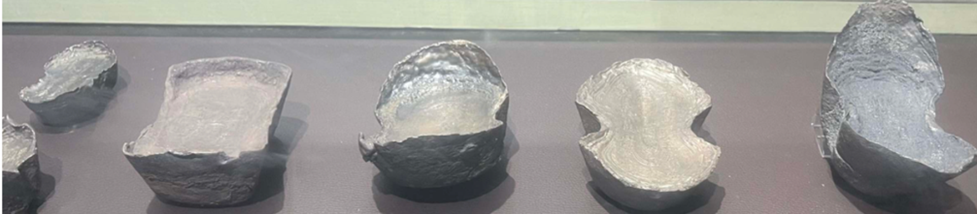
Conceptually, the project treats currency use as the result of interaction between state initiative and market adoption. The state could declare legal tender, mint coin, and require taxes to be paid in particular media. Yet whether a currency actually circulated depended on its acceptance by users. Their choices were shaped by credibility, availability, and transaction costs. Monetary systems therefore rested not only on formal authority but on sustained confidence. From this perspective, decentralisation was not simply evidence of policy failure. It was often embedded in the economic geography that structured pre-modern China.
Methodologically, my research draws on an extensive range of sources: official dynastic histories, fiscal records, regional gazetteers, contracts, inscriptions, and private writings collected from archives and libraries in China, Japan, and the United States. This research relies on this extensive data collection made possible by generous support from the Economic History Society. By combining official fiscal records with local evidence, I have constructed an original millennium-spanning dataset that traces monetary supply, price movements, seigniorage rates, issuance patterns and circulation structures across dynasties. This broader evidentiary foundation enables systematic examination of monetary plurality.
The project speaks to several ongoing debates. For monetary history and political economy, it provides sustained evidence of multi-currency regimes functioning within a politically unified empire, engaging questions raised by Hayek on denationalisation and comparative institutional analysis. It also offers historical depth to contemporary discussions of decentralized currencies, suggesting that monetary plurality is not a novel disruption but a recurring feature of complex economies. Finally, by situating Chinese monetary history within debates on state capacity and institutional development, the study contributes to the Great Divergence discussion by introducing a distinctly monetary perspective.
At its core, this research asks what it meant for an imperial state to “control” money. Across a millennium, monetary authority in China was exercised through negotiation, adaptation, and coexistence, all leading to an outcome that complicates conventional narratives of centralized power.
To contact the author:
Zoey Shen
London School of Economics
