
Wages of English, Scottish and Irish Sailors in Spain during the Second Half of the Sixteenth Century: A Comparative Analysis
Home > Wages of English, Scottish and Irish Sailors in Spain during the Second Half of the Sixteenth Century: A Comparative Analysis
This blog showcases the research of Andrii Pastushenko of the Simon Kuznets Kharkiv National University of Economics, which was supported by the Economic History Society through the Carnevali Small Research Grant.
—
In my forthcoming monograph, ‘Catholicism and Elizabethan Seafarers: Between England and Spain’ (British Academy Monographs series), I examined the presence of English mariners in Spain, with a particular focus on their identities and roles during the Anglo-Spanish War (1585 – 1604). The current project responds to new questions that emerged from that research and forms the foundation for a broader study of British mariners—English (including the Welsh and the Cornish, who were registered as English in Spanish records), Scottish, and Irish—who lived and served in the Iberian navy during the second half of the sixteenth century.
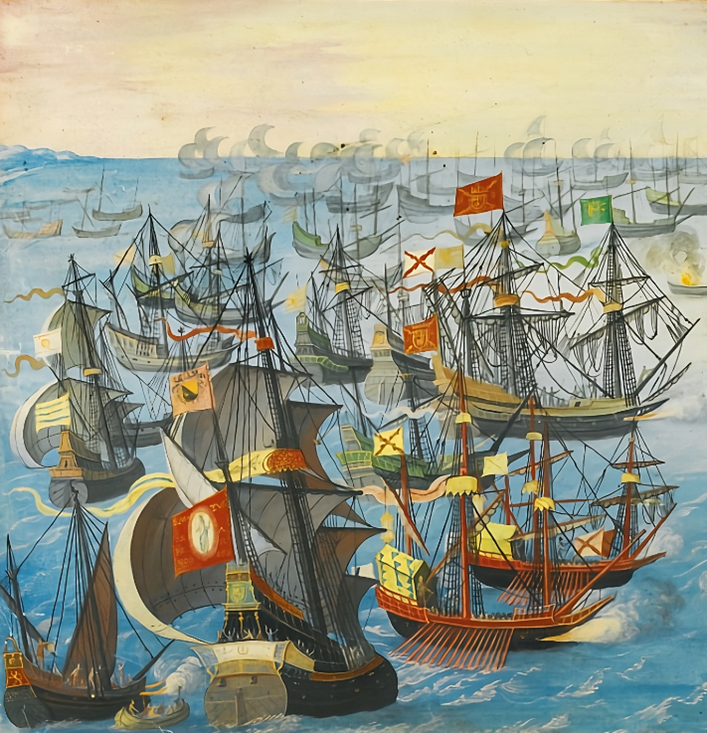
The relations between British sailors residing in the Spanish Empire and Spanish secular and religious authorities tend to be strained, particularly during the Spanish War, which fostered suspicion towards individuals from a hostile nation. However, Spanish attitudes were not uniformly hostile. The English, understandably, encountered greater discrimination than the Irish and Scots. The leader of English Jesuits, Robert Persons, S.J., wrote that the Spanish authorities ‘showed no confidence in any living person of our nation both within and without the kingdom’. The Irish and Scots were generally viewed more favourably, benefiting from the perception of their nations as more sympathetic and Catholic in orientation.
These perceptions were shaped by the complex political contexts in both countries: Ireland was undergoing continued Tudor conquest, while Scotland was not decisively Protestant. King James VI remained sympathetic to Catholicism, and the country was divided between a predominantly Protestant Lowlands and Catholic Highlands and northern regions, which the local authorities struggled to convert. However, this generally favourable perception did not entirely suppress negative attitudes towards the Irish and Scots, who were sometimes suspected of collaborating with Protestant English—particularly merchants—by assisting them in disguising their ships and goods. On the other hand, Spanish authorities were in urgent need of men in their navy—particularly those who could serve as deep-sea pilots, familiar with the British and Irish coastlines and capable of navigating large ships through the Channel, which was notoriously dangerous due to its shifting sandbanks, strong currents, and sudden squalls and storms. Migrants were also valued for their usefulness in translation, interrogation, and intelligence gathering. Naval accomplishments and public expressions of Catholic piety, along with familial ties to prominent Catholic houses such as the Ferias or the Montagues, or associations with notable Catholic military leaders, including Sir William Stanley, helped to foster trust and recognition in Spain.
By drawing on payment lists and memorials (petitions) of mariners and soldiers it will be possible to trace the evolution of wage patterns, construct comparative charts and tables, and examine potential correlations between fluctuations in mariners’ pay and the broader dynamics of the war and economy and eventually feel the gaps in historiography. Historical studies have addressed seamen’s wages, but have primarily focused on Spanish sailors, highlighting the hardships of their lives. Notable contributions in this field include the work of distinguished historians such as David Goodman and Pablo E. Pérez-Mallaína. However, the wages of foreign sailors have too rarely been the focus of scholarly attention and have therefore not been examined through a comparative approach and in relation to their broader historical context—an omission this proposed research aims to address.
My article, titled ‘Wages of English, Scottish and Irish Sailors in Spain: A Comparative Analysis’, will provide a novel and detailed examination of foreign mariners’ wages within the Spanish naval context during the Anglo-Spanish War, addressing a significant gap in existing historiography. It will offer fresh insights into the economic dynamics of maritime communities and their interactions with broader political factors. In addition to the article, this research will build collaborative networks with scholars and archivists across Europe, enhancing interdisciplinary dialogue on economic history, naval history, and identity studies. It will be disseminated through conferences, seminars, and public lectures, ensuring broad scholarly engagement and impact.
To contact the author:
Andrii Pastushenko
LinkedIn: linkedin.com/in/andrii-pastushenko-b35395147
Simon Kuznets Kharkiv National University of Economics
