A tribute: Professor Melvyn John Hatcher 1942-2026
Home > A tribute: Professor Melvyn John Hatcher 1942-2026
In this post Dr Peter Martland and Dr Charles Read present a tribute to Professor Melvyn John Hatcher. With thanks to the Master and Fellows of Corpus Christi College, Cambridge.
—
Members of the Economic History Society will be greatly saddened to learn of the death of Professor Melvyn John Hatcher, who died in Cambridge on Saturday 13 June 2026, aged 84. John was a distinguished historian of the economic and social history of England from the Middle Ages to the eighteenth century. Appointed Professor of Economic and Social History in the Faculty of History at the University of Cambridge in 1976, and later Professor Emeritus, he was also for many years editor of the Economic History Review, the Society’s leading international journal, between 1996 and 2001. A long-standing member of the Economic History Society, John made an enduring contribution to the field through his scholarship, teaching, supervision and service to the discipline.
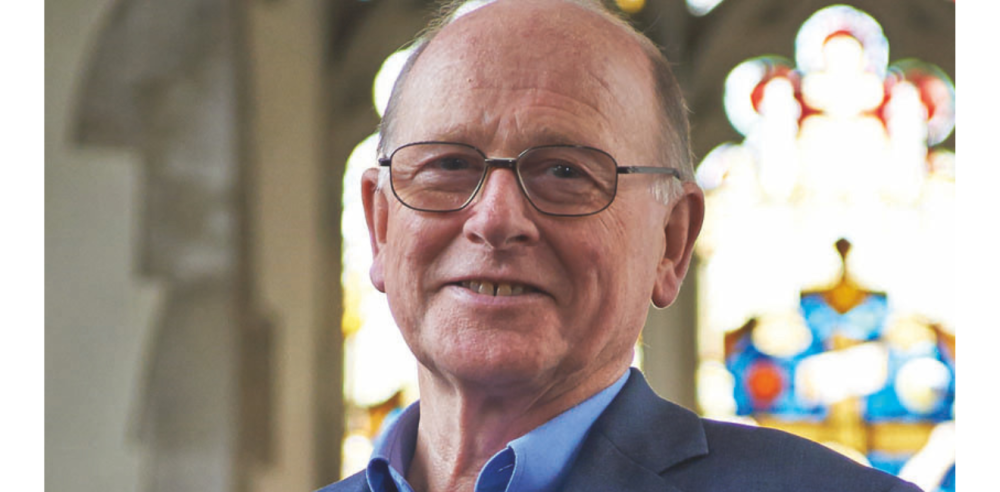
Of his early life John wrote: “I grew up in pre-gentrified Islington [the son of a printworker at the Bank of England] and went to the local grammar school, Owen’s. The premature death of my father on my nineteenth birthday compelled me to abandon my plans to go to university. Instead, I went to work as a salesman for H J Heinz and then J & J Coleman while studying for a BSc (Econ) degree as an evening student at LSE [he graduated with First Class Honours]. After graduation I enrolled full-time for a PhD at LSE and in 1967 I was appointed to a lectureship at the University of Kent. I came to Cambridge in 1976.” In 1967 John married Janice Miriam Ranson and the couple had two daughters.
John’s London University doctoral dissertation on ‘Rural Society and Economy of the Duchy of Cornwall, 1300-1500’ was published in 1970 and followed by important monographic work including English tin production and trade before 1550 (1973), A history of English Pewter (1974) and a volume of the history of the coal industry (1993). John published widely on medieval English rural society, population and economic change; notably with Mark Bailey, Modelling the Middle Ages: the History and Theory of England’s Economic Development (2001). John is however perhaps best known for his innovative and evocative work on the biggest demographic event of the medieval era: The Black Death: A Personal History (2008).
Of his work and writings John wrote “My general field of research is the economic and social history of England from the middle ages to the eighteenth century. Within this broad area the focus of my attention in recent years has included the population history of medieval and early modern England; the rise of the British coal industry; the Black Death; wages, living standards, working habits and leisure in medieval and early modern England; and the history and theory of economic development in the middle ages. My most recent publications include a book on the experiences of the ordinary individuals who lived and died in the Black Death, which combines history with fiction, a reappraisal of Marxist interpretations of feudal society, an extended critical study of the methods and sources used to measure living standards and real wages from the thirteenth to the nineteenth centuries, and a bold challenge to traditional historiography and many of the models and interpretations of economic and social development it supports by arguing for a radical upward revision of the productivity of peasants who for centuries cultivated the bulk of English farmland.”
He was elected to a fellowship of Corpus Christi College, Cambridge, in 1976 (and on his retirement he became Life Fellow) and was for many years the college’s Director of Studies in History. It was in that role he became a renowned, inspiring and much-loved supervisor, with many of his undergraduate and graduate pupils going onto enjoy distinguished careers, several following John into academic life. As a Corpus Fellow he was an early advocate of widening access and a strong supporter of the admission of women to the College, as well as a strenuous supporter of early-career academics in the field of economic history. John will be remembered with admiration and affection by generations of students, colleagues and fellow economic historians, and with gratitude by the Society to which he contributed so much.
