Petitions, plantations, and the ‘colonial crown’: researching Barbados’ royal past
Home > Petitions, plantations, and the ‘colonial crown’: researching Barbados’ royal past
In this blog post Camilla de Koning (University of Manchester and Historic Royal Palaces) presents their research, which was supported by the EHS Research Fund for Graduate Students.
—
When King Charles II was restored as the King of England, Scotland, Wales and Ireland in 1660, he also regained the ‘Colonial Crown’. Throughout the sixteenth and seventeenth centuries, many overseas territories and islands in the Caribbean, Atlantic, and in the Americas had been claimed in the name of the English Crown. However, between 1660 and 1727, none of the Kings or Queens ruling this British empire ever left Britain or Europe to venture into their colonies. Without the physical presence of a ruler, the Crown’s rule over colonies was sustained by an elaborate colonial administration. This did not mean they were bereft of influence or interest. My PhD dissertation ‘Crown Engagement in Britain’s Emerging Empire, 1660-1727’ seeks to answer the question: how did the personal authority, character, and agency of the late Stuart monarchs shape their individual Atlantic colonial interests and strategies? To do so, I have selected two geographical case studies: Barbados and Virginia, both of which are amongst the oldest colonies and were so-called ‘Crown colonies’. In these colonies, the Crown (assisted by the Privy Council) remained the highest legal authority.
In the first three years of my PhD, I have worked through many English, German, and Dutch national archives, researching three aspects at the core of my research. First, I have tried to create an image of how aware each monarch was of ‘their empire’; secondly, I have examined which choices they made that reflected their own ambitions and interests; and lastly, I have investigated how those around them reflected on these first two aspects. However, I kept one of the most important research questions for the last part of my PhD: how did those living in the colonies, and those exerting royal power in the colonies through government, influence the monarch through petitions, resistance, and revolution? With support from the EHS Research Fund for Graduate Students, I visited Barbados to research this question through archival research and visits to heritage sites.
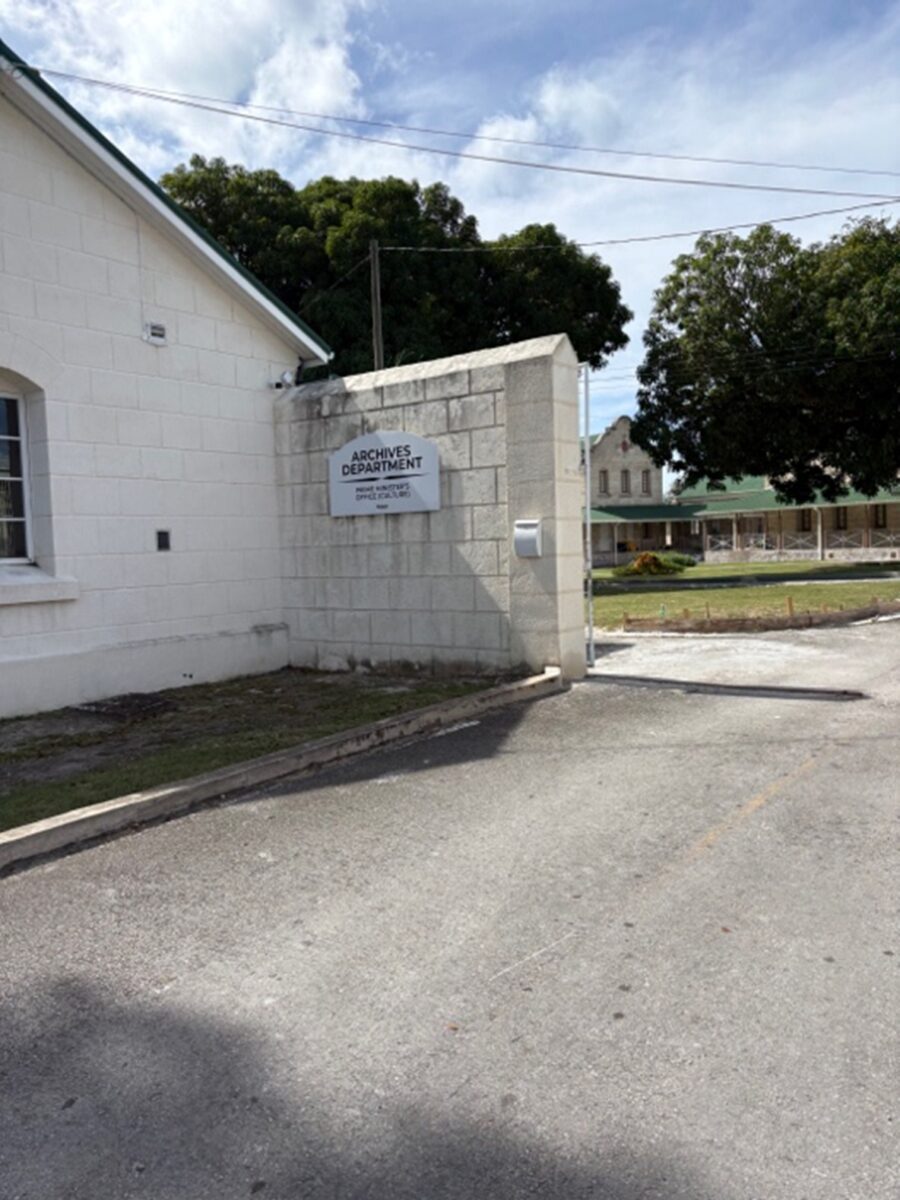
The Barbados Archives Department (Image 1) is in the parish of Saint Michael, and the material it holds is incredibly rich. My research in the Barbados Archives initially focused on three distinct queries. One of the most significant ways to gauge how those living in the colonies interacted with the monarch is through petitions. These petitions were addressed to the Crown, and were read in Privy Council meetings. To find out who these petitioners were, I scoured through the wills, deeds of attorney, and estate records. Baptismal, marriage, and burial records helped me gain a clearer understanding of who these people were, what motivated them to petition the monarch, and how the matter was settled. Some of the most interesting petitions I researched were cases in which the Barbadian Court of Escheats claimed property on behalf of the Crown. As Barbados was a society built on enslavement, this also meant that the Crown became the owner of active plantations, which were worked by hundreds of enslaved people. Without visiting the Barbados Archives, I would have never found as much detail about the people who were enslaved there.
A second group of people I wanted to research were the Governors of Barbados. These men were appointed by the monarch and were often linked with the court through family or naval/maritime service. During my research visits, I gained a better understanding of ‘the King’s House’, an estate called Fontabelle, which was the Governor’s official residence until the start of the 18th century, when Bevill Granville feared its closeness to the sea, and therefore to possible French attack. Unfortunately, the correspondence between several seventeenth- and eighteenth-century governors with the monarch was destroyed by a fire in the archives in 2024.
Lastly, my research focused on the Codrington plantation. In 1711, the will of Christopher Codrington bequeathed his sugar plantation, Codrington, to Queen Anne and her beloved Society for the Propagation of the Gospel. Codrington instructed that the plantation would remain in cultivation, also bequeathing the hundreds of enslaved people he had owned to work for the benefit of this Society. Today, the seventeenth-century plantation house is ‘Codrington College’, a theological college. I visited the College, although unfortunately, the information and memorial on the college’s connections to slavery are not accessible to the public.
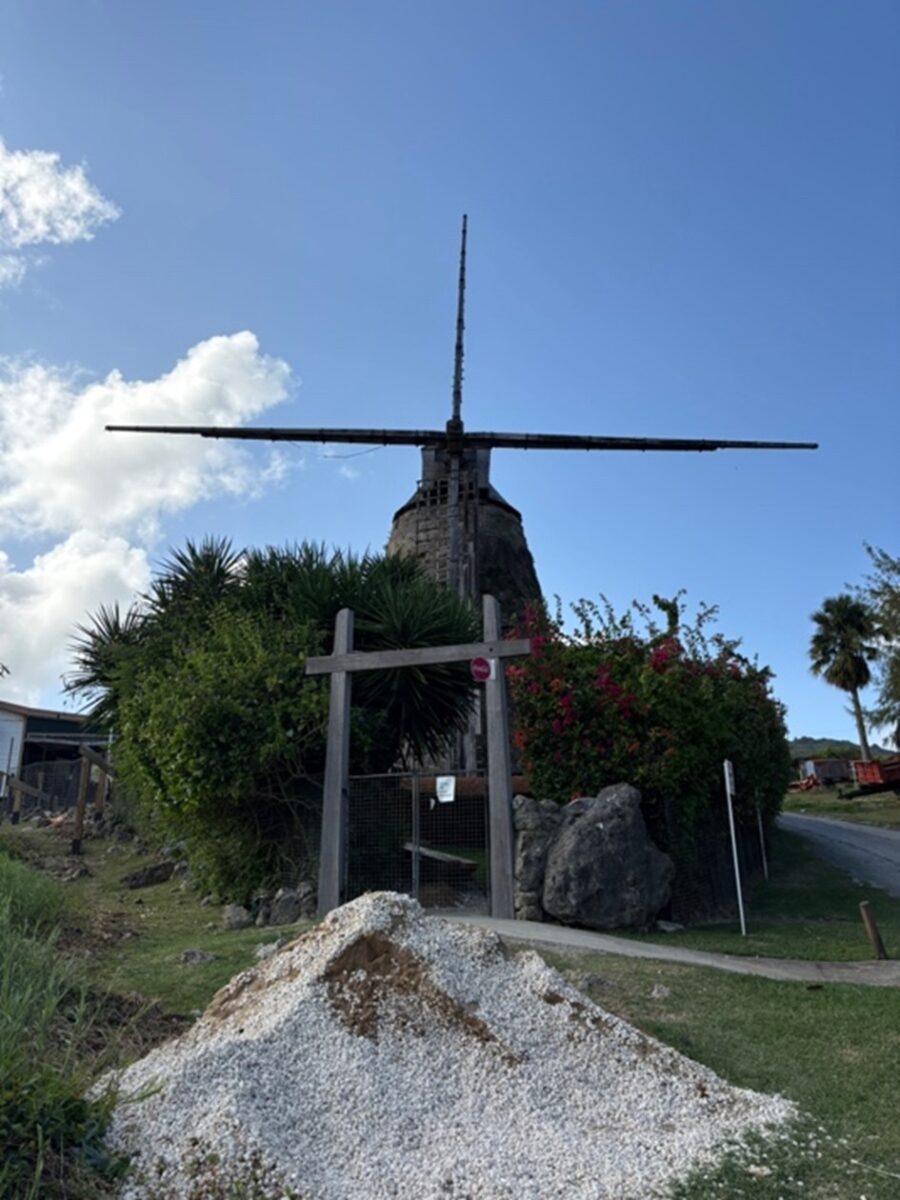
During my time in Barbados, I was also very interested in how museums and heritage sites presented the island’s history, including that of the Indigenous Kalinago and Arawak peoples who visited the island in their seasonal movements, and of colonisation. One of the most interesting sites I visited was the Morgan Lewis Mill (Image 2), a restored seventeenth century mill. Mills were central to sugar cultivation, and the ruins which can be found all over the island underline how deeply sugar shaped the island’s landscape and economy.
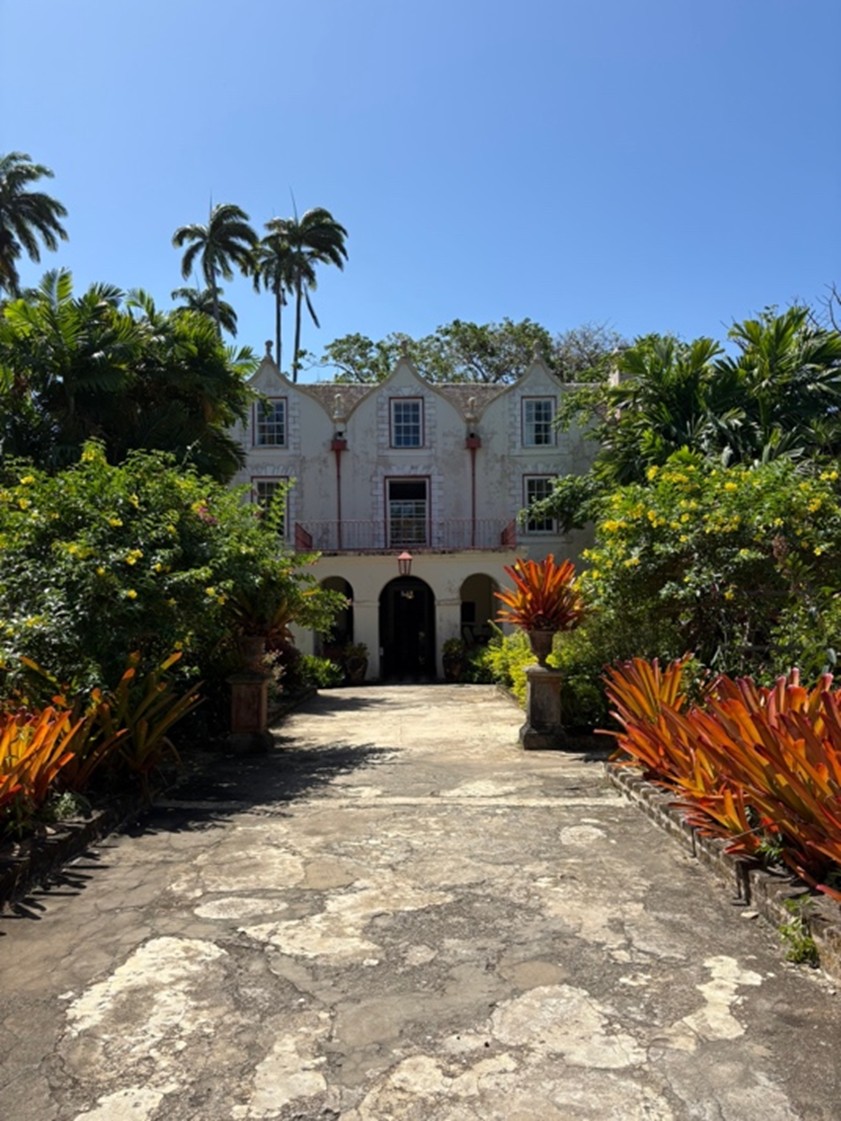
I also visited the Barbados Historical Museum, two plantation houses open to the public, and the impressive St. Nicholas Abbey, now a rum distillery. The main house of St. Nicholas Abbey (Image 3) is one of three surviving Jacobean houses in the Western Hemisphere. I incidentally visited on a day that sugar cane was being harvested. We therefore saw the process of crushing sugar cane, which St. Nicholas Abbey uses a steam engine for. Having read so much about the process of sugar cultivation and the work enslaved people performed on sugar plantations throughout the early modern period, seeing this process in action on a historic estate offered a powerful, and at times unsettling, perspective on the histories I study.
To contact the author:
Camilla de Koning
camilla.dekoning@postgrad.manchester.ac.uk
University of Manchester and Historic Royal Palaces
