
Women in the Private Asylum Business in Nineteenth-Century England
Home > Women in the Private Asylum Business in Nineteenth-Century England
This blog post by Rebecca Wynter and Len Smith (Both of the University of Birmingham) is based on a paper presented to the ‘Women & Entrepreneurship: Agency, Experience, and Enterprise’ workshop of the Economic History Society Women’s Committee in December 2025.
—
Women, so the story goes, were victims of the expansion of medicine and psychiatry in the eighteenth and nineteenth centuries. In her seminal 1985 book, The Female Malady, feminist scholar Elaine Showalter wrote that there were two images of women and mental illness: ‘madness as one of the wrongs of woman; madness as the essential female nature unveiling itself before scientific male rationality’ (p.3). Men, so the story goes, profited from women, not least from the expansion of so-called ‘lunatic asylums’. In his own 1987 seminal volume, Roy Porter, argued that ‘Madhouses and mad-doctors arose from the same soil which generated demand for … that host of other white-collar, service and quasi-professional occupations which a society with increased economic surplus and pretensions to civilization first found it could afford, and soon found it could not do without’ (p.164).
Much research has been done since the 1980s. Nuance has developed. Ideas and arguments for patient autonomy have been expanded. Yet still, women have been limited in the minds of historians, caught in our web of cultural assumptions and the limited space given to other possibilities. Our research on women as madhouse proprietors pushes open that space and upends historiographical myths. Women were not always at the mercy of men. In what might now be termed private psychiatry, they carved out routes to independence, medical responsibilities and profit – and they did so by working with medical men, often as their boss.
Parliamentary papers recorded that in 1819, there were 13 private asylums owned by women out of a total of 77 in England. In 1890, there were 18 out of 87. This represents around 20% of all private facilities, though these figures do not reflect the overall numbers of women who entered and exited the business, nor those who worked with a male proprietor.
Our research into the records of the government inspectorate (the Commissioners in Lunacy), local and Quarter Sessions documentation, as well as the press, indicates that proprietresses were broadly distributed into two groups. The first were the widows or family members of the (usually male) founder. In several cases a daughter or niece became proprietor. Some private asylums passed through several generations, with extended periods of female control. The second group were independent women without evident family connections, who may have gained experience elsewhere in mental healthcare. Particularly in the London area, entrepreneurial women recognised asylum proprietorship as a promising opportunity.
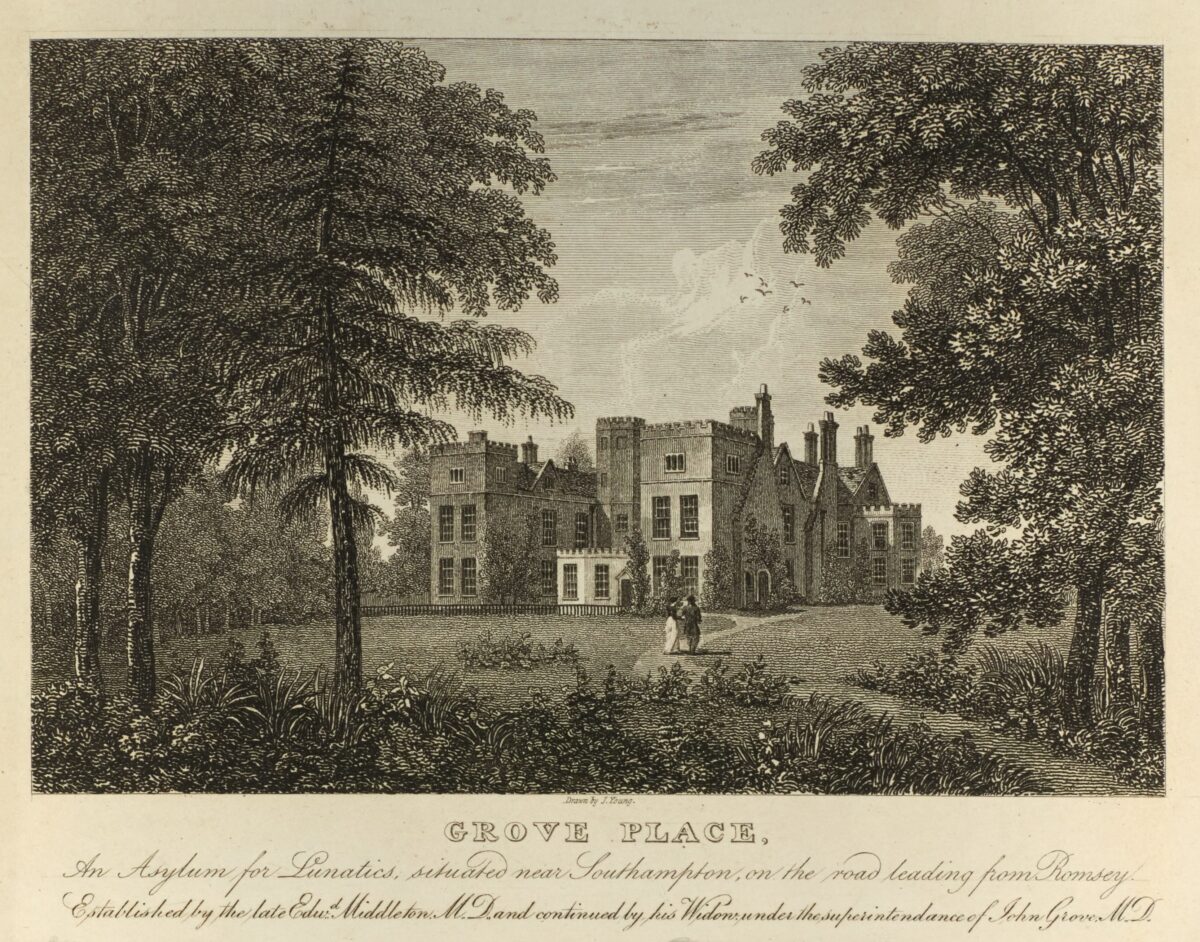
Henrietta Middleton is one example of the first group. She took over Grove Place, an old mansion inland of the southern coastal city of Southampton, after her husband Dr Edward Middleton died in 1826. She expanded the business, supplementing wealthy clients with pauper patients. In 1837 her licence allowed for 74 paupers and 23 private patients. In 1838, a scandal whereby staff abuse precipitated the death of a female pauper, damaged Middleton’s business. Further criticisms in the 1840s from government inspectors brought threats to remove her licence. Doubtless under severe stress, she died in 1847, aged 64.
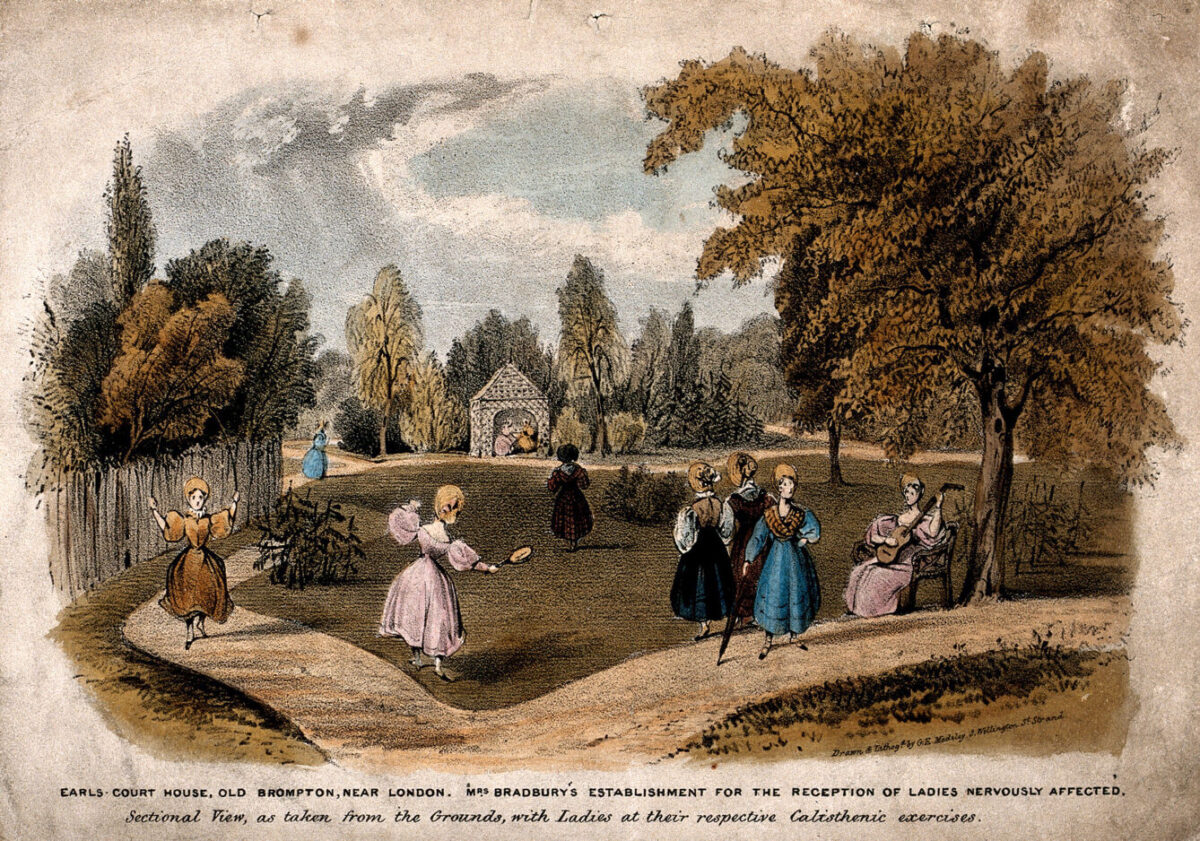
Mrs Mary Bradbury was one of the most successful of the group of entrepreneurial women. The 1816 start-up money for her first asylum business in the Chelsea area of London seemingly came from her mother, Elizabeth Bradbury, formerly matron of Bethlem Hospital. Spotting a gap in the market, Mary specialised in women patients and probably learnt ‘on the job’ from Elizabeth. She also benefitted from her mother’s connections to senior medical men, which gave a direct source of customers. This blueprint was pursued for over three decades, through three moves, which saw her enterprise expanding and the number of profitable patients increasing.
By the time Bradbury arrived at her final premises, Earl’s Court House, in 1832, she was a highly successful businesswoman, partly due to her savvy marketing. Like her rivals, Bradbury advertised in local newspapers, but in 1836 she produced a prospectus unlike the marketing of any other proprietor, male or female. Here, she employed the testimonies of great medical men and exploited the fashionable health benefits of the grounds, as shown below.
With our forthcoming book, Women in the Private Asylum Business, c.1600-1890: ‘Lady Speculators’ (Palgrave Macmillan, 2027), we will expand on these stories. We will highlight the success with which women spotted gaps in the market and marketed the medical treatment, care and amenities that they offered, charting customer profiles, the payments made by patients’ families, and the business success these women achieved.
To contact the authors:
Rebecca Wynter
University of Birmingham
Len Smith
University of Birmingham
