
Political Connections and Israeli Firms in the Occupied Palestinian Territories, 1967-1993
Home > Political Connections and Israeli Firms in the Occupied Palestinian Territories, 1967-1993
In this blog post Eden Lumerman (London School of Economics) presents her research, which was supported by the EHS.
—
Do political connections influence the movement of capital when a border opens, and two economies begin to merge? My project examines this question in the context of the partial integration that occurred between the Israeli and the Palestinian economies in the aftermath of the 1967 war.
In June 1967, Israel occupied the West Bank and the Gaza Strip (WBGS) territories from Jordan and Egypt (respectively), placing them under full military jurisdiction until the signing of the Oslo Accords and establishment of the Palestinian Authority in 1993. Although the WBGS were not officially annexed into Israeli sovereignty on the eve of occupation, the removal of official trade borders and the managing of Palestinian economic affairs by an Israeli military governor had led to a process of un-even integration between the two economies. Two channels of integration, running in opposite directions, are well documented in the literature: labour and goods. Labour flowed from the WBGS into Israel, primarily to the construction and agriculture sectors. By 1992, one-third of all employed Palestinians were working in Israel, their income composing 42 percent of the WBGS GDP for that year. Goods flowed from Israel to the WBGS, with an average of 90 percent of all WBGS imports coming from Israel, with imposed non-tariff barriers on exports to Israel.
This project traces a third channel of integration, which has gone largely undocumented: capital. The story of capital movement between Israel and the WBGS has been buried in the protocols of one administrative committee, the “Directors-General Committee on Civilian Matters in the Territories Administered by the Israel Defense Forces (IDF)”. This committee functioned as the de-facto executive branch in the WBGS, setting economic policy (taxes and fees, exchange rates, public sector salaries, etc.) and controlling the approval of permits for anyone who sought to invest and set up establishments in the WBGS. Through manual review of the protocols, I extract granular information on Israeli companies which received permits to invest in setting up establishments in the WBGS.
The next stage is to find matched companies that did not operate in the WBGS, paired to the permit-holders on sector and year of establishment. I draw these control companies from a database of joint-stock company registrations constructed from Reshumot, the gazette of the State of Israel, in which official records were published regularly. Once the sample is complete, with each company recorded with its unique ID, name, stated purpose, and date of establishment, I purchase the corresponding company files from the Israeli Registrar of Companies, work made possible by the generous support of the EHS Research Fund grant.
The company files allow me to extract information on each firm’s stakeholders. I match these individuals against a political dataset built from the Israeli parliament (Knesset) party lists: for every party passing the electoral threshold (1% of votes), the slate of up to 120 candidates in each election year. Crucially, this captures not only those who successfully entered the Knesset as members or ministers, but the wider party elite named on the lists. Matching firm stakeholders against these party elites lets me measure, across election years, the extent to which a firm’s principals sat within a political party establishment, and in particular, whether the stakeholders of firms that operated in the territories were more, less, or equally connected than those of firms that did not.
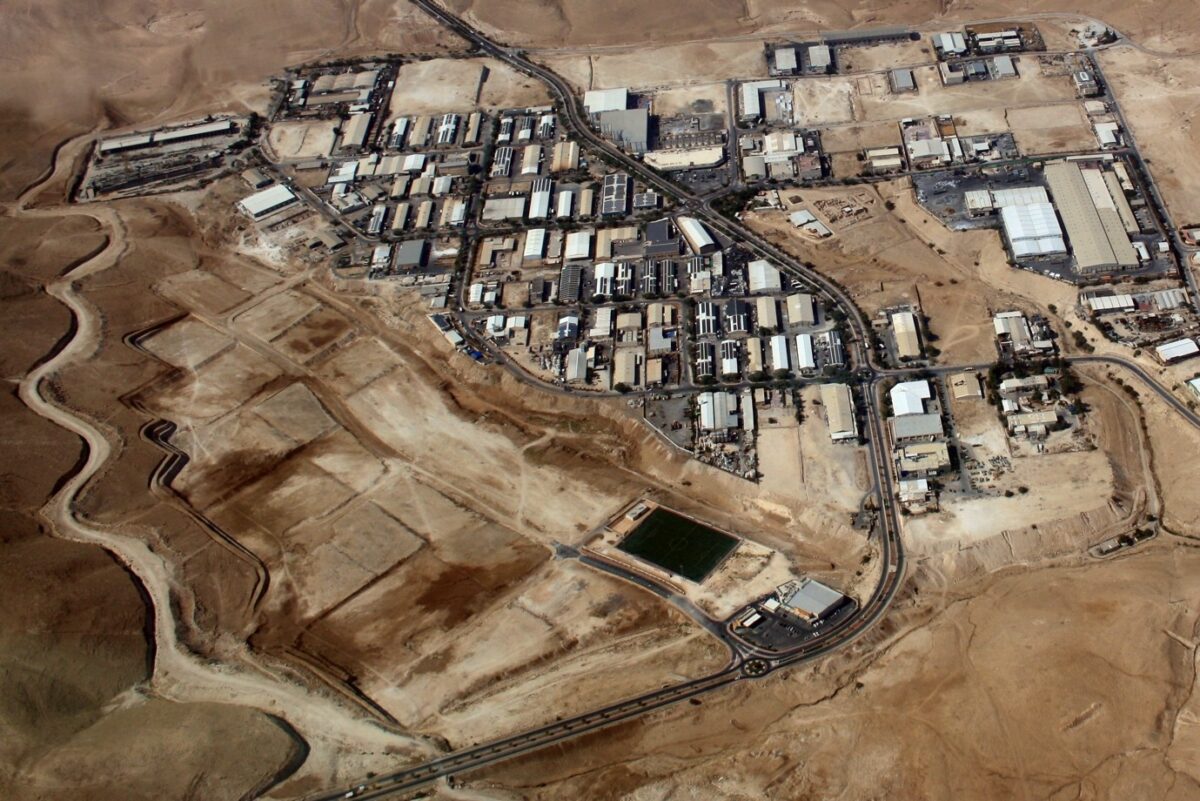
The implications of this research design are twofold. First, it invites a discussion of the costs and benefits of political connections. The costs are borne by both Israeli and Palestinian firms. Non-connected Israeli firms forgo advantages their connected counterparts secure when operating in the WBGS, primarily lower input costs. Palestinian firms, on the other hand, are excluded from entitlements reserved for Israeli firms, such as state-backed insurance schemes and better access to credit, regardless of whether they held any political connection at all.
The benefits, by contrast, turn on timing, and the two possibilities imply opposite causal stories. If ex-ante connected firms were more likely to operate in the WBGS, then they benefitted from cheaper inputs and gained an edge over both Israeli firms operating in Israel and Palestinian firms operating in the WBGS. This implies connections drove the movement of capital across the border. If, instead, firms became more connected only after entering, the causal arrow reverses: firms crossed the border to lower costs, and the economic weight they accumulated there may have generated a new political power, one that is dedicated to maintaining these firms’ position in the WBGS. This is the second implication, and it remains an open one until the data collection process is completed: were political connections the driver of moving capital across border, or the result of it? Distinguishing connections that predate entry from those that follow it is the identification problem this project must resolve.
References:
Arie Arnon et al., The Palestinian Economy: Between Imposed Integration and Voluntary Separation (Brill, 1997).
To contact the author:
Eden Lumerman
e.lumerman@lse.ac.uk
London School of Economics
