
Urbanisation and health: longrun and interdisciplinary perspectives
Home > Urbanisation and health: longrun and interdisciplinary perspectives
This post by Romola Davenport provides an overview of the 2025 workshop Studying Health in Towns, which was supported by the Economic History Society.
—
In the summer of 2025 an EHS-funded workshop ‘Studying Health in Towns’ brought together historians, archaeologists, epidemiologists and economists to consider urbanization and health from diverse evidential perspectives and across traditionally siloed periods. The workshop had two main objectives: (1) to increase engagement between researchers in archaeology and history who are working on the same periods but use very different sources, and (2) to encourage the development of a more integrated long-run account of public health. These aims have been given impetus by two relatively recent developments. First, since 1990 planning policy in England has required new construction projects to include developer-funded archaeological investigations, fueling an explosion of bioarchaeological research especially on urban and peri-urban sites. Second, rapid technical advances and precipitous falls in the costs of bioarchaeological techniques especially DNA sequencing and radioisotopic research have made it viable for archaeologists to study large burial samples with adequate statistical power, and to identify recent and lifetime changes in diet as well as ancient pathogens preserved in human remains. These advances offer entirely new sources of evidence for historians regarding health, nutrition, migration, childcare practices and diseases. Conversely, many bioarchaeologists are now focusing on periods for which there is abundant textual evidence with which to contextualise biological evidence and which can help to identify and potentially to correct for important sources of sample biases. However at present there is still relatively little engagement between archaeologists and historians.
Workshop sessions were organised chronologically (medieval, early modern, early industrial and late 19th/20th century) and each included speakers from a variety of disciplines. While the majority of papers addressed British contexts, a lively flash talk session (see programme) included papers spanning the Mediterranean, and the keynote paper by Daniel Gallardo-Albarran (Wageningen) provided a global overview of the Sanitary Revolution. In addition, Lone Simonsen (Roskilde) presented an analysis of smallpox in Copenhagen that showcased the power of mathematical modelling to understand historical disease outbreaks.
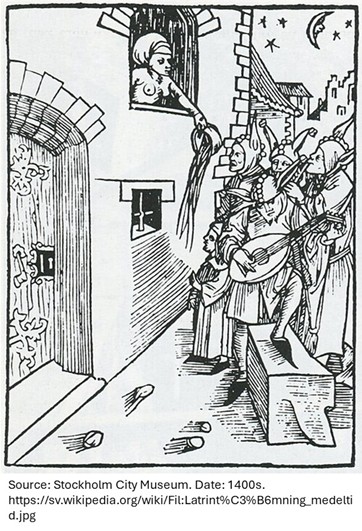
The workshop papers addressed two main themes. The first was to what extent water and sanitation were perennial urban concerns or only emerged as major issues in the 19th century. Carole Rawcliffe (UEA) rebutted the very widespread academic as well popular ‘Pythonesque’ view that the inhabitants of late medieval towns were indifferent to the sanitary state of their environment. Carole argued that stereotypes such as the emptying of chamber pots from windows in fact derived from prosecutions for the negligent disposal of domestic and industrial waste, and she meticulously documented the growth of extensive medieval legislation to regulate public spaces and to protect the water supplies and public health in several English towns. Craig Cessford (Cambridge Archaeological Unit) provided compelling archaeological evidence for an enduring preoccupation with the quality of urban water supplies with a study that tracked the construction of wells and other water sources in Cambridge from c.1050 – 1900. Adrian Smith (Oxford) provided an elegant demonstration of how eggs of intestinal worms from historic latrines and burials can be used to identify changes in both diet and hygiene practices, using worm species that are transmitted via either faeces or the consumption of infected animals.
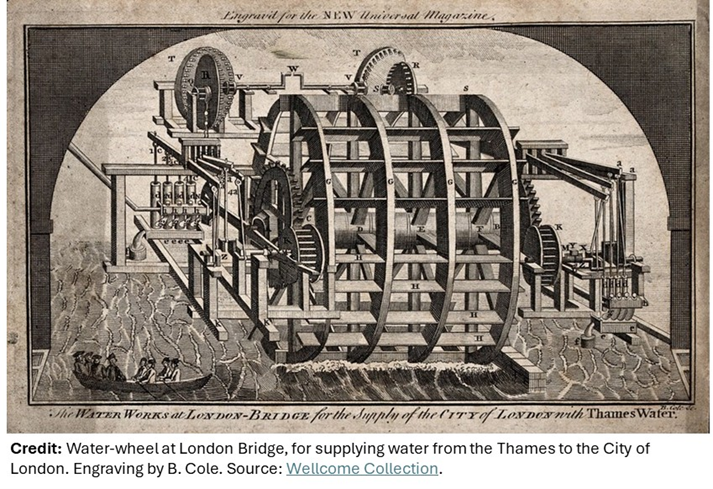
Carry van Lieshout (The Open University) documented the precocious commercialization of water supplies in London and the development of a ubiquitous network of piped water by the late 18th century. Metropolitan inhabitants enjoyed very wide access to piped water well before the impetus of cholera epidemics or national public health legislation. Daniel Gallardo-Albarran (Wageningen) argued on the other hand that qualitative changes in 19th century Europe with respect to public health ideology, demand and technology drove a revolutionary modernization of waterworks and sanitation, first in mid-19th century Britain and then globally. Hanna Jaadla (Cambridge) concluded this theme with a paper addressing the question of why very large investments in water and sewerage in British towns apparently had little effect on infant diarrhoeal mortality until the 1910s, decades after the decline or disappearance of ‘waterborne’ diseases such as cholera, dysentery and typhoid. She argued that behavioural changes were critical and independent of major infrastructural improvements.
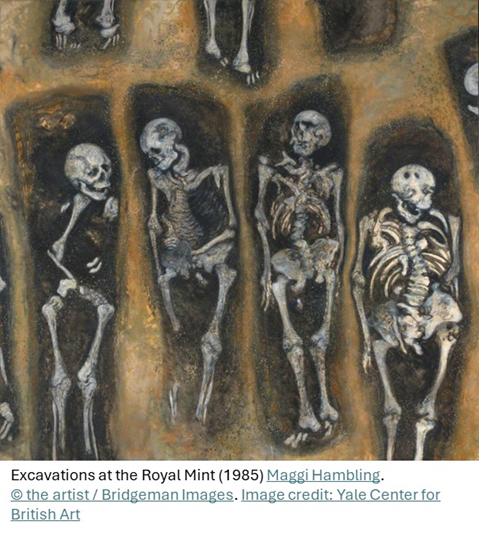
The second main theme was social and spatial inequalities in health. One of the great advantages of bioarchaeological research over historical research on burial records is the capacity to discern (some of) the health conditions that affected the living. However archaeological samples are usually heavily biassed and difficult to interpret. Key biases include non-random sampling of sites; lower survival of infant and child remains; and the osteological paradox (that only those who died are observed, and these may not be representative of the living population). Additionally, comparing the health status of urban and rural populations or of wealthy and poor burials is often complicated by life course factors. Urban migrants born in healthier rural areas may have experienced very different disease environments and nutrition in childhood compared to adulthood, and their skeletons may not provide reliable evidence of urban environmental conditions in their place of burial. Importantly, such rural-urban migrants often comprised very substantial majorities in pre-Victorian towns and cities. John Robb (Cambridge) provided a meticulous example of the importance of careful weighting of archaeological evidence drawn from a non-random sample of burial sites in a comparison of osteological remains of individuals of differing social status in late medieval Cambridge (as part of the After the Plague study). The burial sample was heavily weighted towards adult recipients of charity (hospital burials), but after adjustment for the probability of inclusion in the sample then the study indicated that while relative wealth was associated with better nutrition, (adult) age at death did not vary by wealth. Nor was the Black Death associated with clear changes in health, causes of death or longevity.
Jo Buckberry (Bradford) illustrated some of the problems in comparing skeletal evidence across different types of rural and urban sites. On the one hand paleopathological investigations suggested urban-rural differences in the prevalence of a number of conditions including osteoarthritis, scurvy, tooth decay, anaemia and tooth enamel hypoplasia (associated with past episodes of acute stress). However in London, where direct comparison was possible, there was relatively poor correspondence between the age distributions of skeletal remains (drawn from several burial sites) and those reported in the London bills of mortality and the later Registrar-General’s reports, suggesting biases in the sources of skeletal evidence. More generally, both burial records and skeletal evidence pose severe problems for the estimation of life expectancy where the population age structure is unknown, and where it was likely to be strongly affected by population growth or migration (as is usually the case in towns, with large ‘bulges’ of young adults).
Becky Gowland (Durham) provided a very poignant example of the complexities introduced by migration in a study of child and adolescent remains from rural and urban Yorkshire in the 18th and early 19th centuries. The rural sample included a surprisingly large number of adolescents, and these had very high rates of scurvy and rickets. Isotopic analyses indicated that many of these adolescents had spent their early childhood outside the local area and parish register and poor law evidence indicated that these were likely to have been pauper apprentices from London working in the local flax mill. The study emphasized both the severe health consequences of deprivation and child labour, and the importance of the careful historical contextualization of archaeological sites. Jelena Bekvalac (London Museum) concluded this theme with an innovative consideration of old age in London during industrialization. A key puzzle is the apparent paucity of older adults in skeletal assemblages, pointing to enduring problems with assigning accurate ages to skeletal remains.
The workshop demonstrated the huge breadth of methodologies and sources now available to study the health of past populations and highlighted the value of, and need for, sustained dialogue between archaeologists, epidemiologists and historians.
To Contact the Author:
Romola Davenport
Cambridge Group for the History of Population and Social Structure, Department of Geography, University of Cambridge.
