
Violence, Justice, and the State in Siena under Medici rule, 1590-1650
Home > Violence, Justice, and the State in Siena under Medici rule, 1590-1650
In this post, Wanxin Du of the University of Warwick discusses his ongoing research, supported by the EHS Fund for Graduate Students.
—
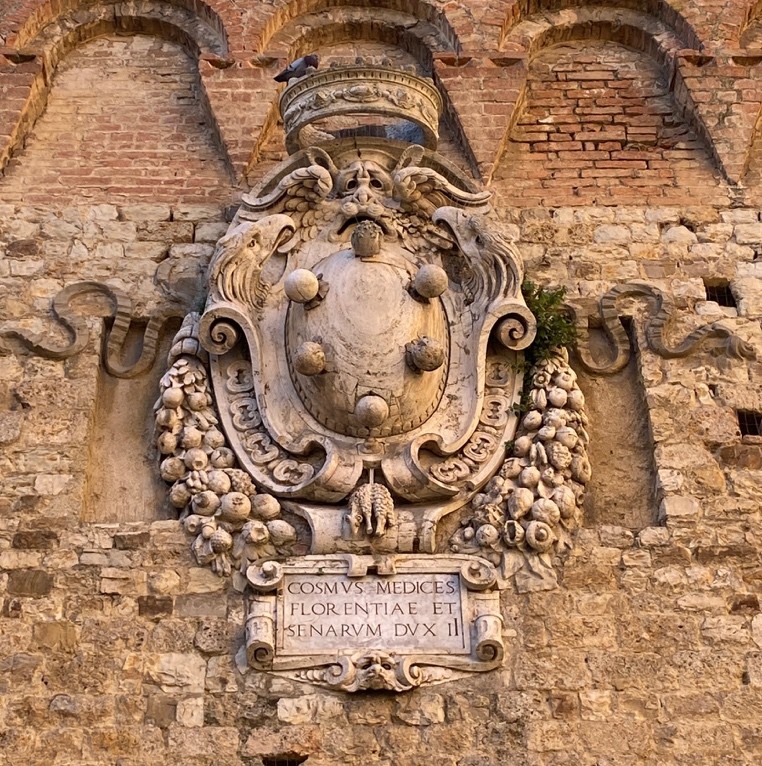
Photo by the author
The interplay between violence, criminal justice, and state constituted a key dimension of early modern Europe. Since the 1970s, scholars have contributed to the understanding of changing crime trends and the role of state formation in controlling violence and shaping justice systems. In 2003, the criminologist Manuel Eisner argued that Europe had experienced a long-term decline in crime, particularly violent crime, from the mid-sixteenth to the early twentieth century. This decline is often attributed to an increased level of state control over crime, as well as the administrative expansion of judicial systems. However, Eisner questioned why early modern Italian states, despite their relatively high level of bureaucracy and judicial control, emerged as exceptions to this trend. Existing studies focus on major Italian cities or regional states, such as Florence, Bologna, and Venice, indicating that violent criminality began to rise in the late sixteenth century and culminated during the first half of the seventeenth century. However, more empirical research is needed if we hope to understand the full picture of changing rates and patterns of violent crime in early modern Italy.
In early modern Italy, the Medici grand duchy was unique due to the coexistence of two distinct states: the ‘old state’ of Florence (lo stato vecchio di Firenze) and the ‘new state’ of Siena (lo stato nuovo di Siena). This arrangement was the consequence of Florence’s conquest of the Republic of Siena in 1559. Following its integration into the Medici duchy (and after 1569, into the grand duchy), Siena is widely regarded as having lost its republican liberties and having assumed a relatively minor role during the grand-ducal period, thus receiving less scholarly attention compared with its dominant neighbouring state. Nevertheless, the state of Siena under Medici rule merits consideration due to its preserved autonomy and intricate legal system. Following the fall of Siena, its territory was granted to Cosimo I de’ Medici as a fief by Philip II, thereby establishing a problematic legal basis for the Medici family’s rule over Siena. Furthermore, from the perspective of the Medici, the former Sienese ruling class was perceived as potentially rebellious. For these pragmatic reasons, Cosimo I and his successors were compelled to pay close attention to Sienese traditions. Consequently, the pivotal 1561 Reformation Law of Government maintained many republican Sienese offices and institutions, and ensured the legal independence of the stato nuovo from the stato vecchio. In practice, Florentine legislation and jurisdiction did not extend to Siena. This explains why historians have characterised the grand duchy as a federal system under a single prince (the Medici grand duke), with the former republic of Siena being described as continuing rather than extinct.
My PhD project explores how early modern Siena, as an integral part of the Medici grand duchy, aligns with or deviates from the historical views on levels of violence between the late sixteenth and the first half of the seventeenth century. The periodisation echoes the global historical context of the ‘seventeenth-century crisis’. Together with other Italian states, Tuscany experienced various crises between the 1590s and 1660s, particularly climate catastrophes and famines during the 1590s, industrial decline and trade depression in the 1620s, and the devasting plague of 1630-33. These socio-economic crises intensified existing social tensions and would serve as catalysts for increased criminality. My research focuses on several violent crimes, including homicide, brawls, insults, and sexual violence. To investigate their shifting rates and patterns, it aims to provide not only a quantitative analysis based on a sampling method, but also the application of several historical perspectives on violence, such as gender, rituals, social order, weapons, and the cultural psychology of honour. Additionally, my project hopes to reveal the mechanisms of conflict resolution in practice. Recent scholarship has argued that traditional interpretations, such as the ‘civilising process’ and the state-repression model, are questionable. Conflict management in early modern Italy was achieved via a complicated mixture of judicial and extrajudicial systems, including litigation, appeals, pardons, peace-making, feud, duels, etc. As demonstrated in Siena under Medici rule, the everyday administration of criminal justice was organised through an intricate network linking the grand duke in Florence, the governor (Medici’s representative in Siena), the captain of justice, local magistrates (capitani, podestà, and vicari) and ordinary Sienese people. I strive to demonstrate that both authorities and individuals acted as interlocutors in such a mechanism.
This project relies on a range of archival sources, particularly judicial and administrative ones. Thanks to the generous support from the EHS Funds for Graduate Students, I will be able to gather essential materials held in the State Archive of Siena, the Archiepisciopal Archive of Siena, and the State Archive of Florence, covering trial records, petitions, statutes, peace agreements, administrative correspondence, and commentaries. Through this case study, I hope to contribute to ongoing historiographical debates on levels of violence in early modern Italy and Europe, and to a reassessment of the nature of state formation in the grand duchy of Tuscany. In the state of Siena, the relationship between violence and justice, and between state and society suggests that the Medici grand duchy followed a distinct and more nuanced path of governance rather than the overly simplistic model of ‘absolutist’ state.
References:
Carroll, Stuart, Enmity and Violence in Early Modern Europe (Cambridge: Cambridge University Press, 2023)
Davies, Jonathan, ed., Aspects of Violence in Renaissance Europe (Farnham: Ashgate Publishing, Ltd., 2013)
Eisner, Manuel, ‘Long-Term Historical Trends in Violent Crime’, Crime and Justice, 30 (2003), 83-142
Fasano Guarini, Elena, ‘Le istituzioni di Siena e del suo stato nel ducato mediceo’, in Leonardo Rombai, ed., I Medici e lo stato senese 1555–1609 (Rome: De Luca, 1980), pp. 49–62
Ascheri, Mario, ‘Siena senza indipendenza’, in I libri dei leoni: La nobiltà di Siena in età medicea, 1557-1737, ed. by Mario Ascheri (Milan, 1996), pp. 5-68.
To contact the author:
Wanxin Du
University of Warwick
